
Webhook Configuration
Inbound and outbound webhooks configured with retry, dead-letter handling, and idempotency keys — tested end-to-end with ngrok and RequestBin before going live.
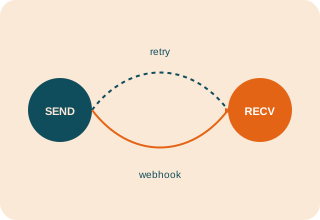
Webhooks are deceptively hard
The naive webhook implementation works on day one and fails on day thirty when the receiver is briefly unavailable, when the same event is delivered twice, or when the platform changes its signing scheme. We treat webhook configuration as a real engineering problem.
What we deliver
You receive a working endpoint with signature verification, an exponential-backoff retry queue, an idempotency key implementation that survives duplicate deliveries, and a dead-letter destination for events your handler cannot process. Every webhook ships with a Postman or RequestBin replay payload so you can re-trigger any historical event during debugging.
How we test
We use ngrok to point the live platform sandbox at your local listener and walk every event end-to-end. Once green, we replay each event against the staging environment before promoting to production.
Related services
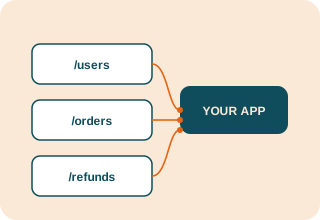
API Endpoint Mapping
We translate your business requirements into a clean, traceable map of every endpoint, payload, and dependency before a single line of integration code is written.
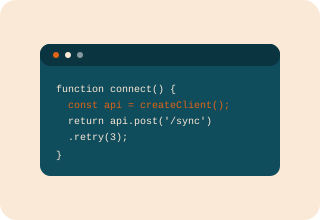
Connector Development
Production-grade connector code in your stack — typed, tested, observable, and shipped with a Postman collection and architecture diagram.
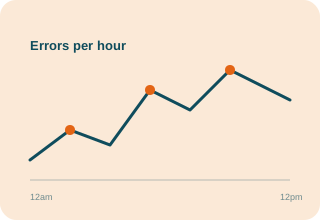
Error Logging & Monitoring
Structured error logging via Sentry, alert routing, and a runbook so the right person sees the right alert at the right time.